Glen Elgin Village
Description
Glen Elgin is a historical village located within the Ball's Falls Conservation Area that dates back to the nineteenth Century. It was established in the early 1800s by two brothers, John and George Ball, United Empire Loyalists.
The family had originally emigrated to Norfolk, England and in 1690, they purchased land in New York's Mohawk Valley and emigrated there. Following the breakout of the American Revolution, Jacob Ball moved to what is now Canada with most of his sons in 1782 and fought with the Loyalist Queen's Rangers and Butler's Rangers militias for the remainder of the war. The family received a land grant from the Crown in 1783, and the remainder of the family emigrated to Canada in the following year.
John and George Ball, two of Jacob's sons, purchased 1200 acres of land in on Twenty Mile Creek from Thomas Butler, brother of Col. John Butler, in 1807. They built a grist mill and a saw mill at the lower falls and a woollen mill at the upper falls.
The town flourished and before long a cooper, blacksmith, tailor, weaver and butcher lived on the land. By 1852 the population of the town, then named Glen Elgin, had grown to 19 inhabitants, however, with the establishment of the Great Western Railway in the late 1850s, most residents relocated to be closer to the railway.
Manly Ball sold the land to the Niagara Peninsula Conservation Authority in 1962 and it is maintained as a tourist attraction.
The Chapel
St. George's Church originally stood in the community of Hannon (South of Hamilton) and when it was replaced in 1973, it was re-located to Glen Elgin to preserve it.
Media
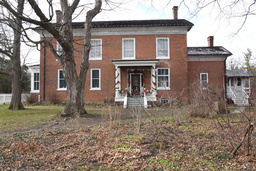
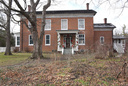 | The Ball's Family Home | 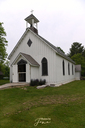 | St. George's Church |
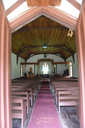 | St. George's Church | 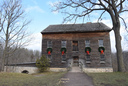 | Ball's Grist Mill |
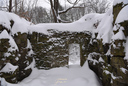 | Ball's Woolen Mill |
| Member Rating |  0/0 0/0 |
| Location | 79°22'58.03"W 43°8'1"N |
| Park | Ball's Falls Conservation Area |
| Type | Historic Building |
| Authority / Owner | Niagara Peninsula Conservation Authority |
| Last updated | 2026-08-29 |
| Updated by | jona |